PPWR Key Concepts Explained
Promote the Use of Reusable Packaging
Prioritising the reuse of packaging over single-use applications where technically and environmentally feasible. Reusable packaging systems intend to encourage bringing packaging to the market that:
- Extends the functional life of packaging
- Reduces material consumption and waste generation
- Supports repeat use across consistent supply chains
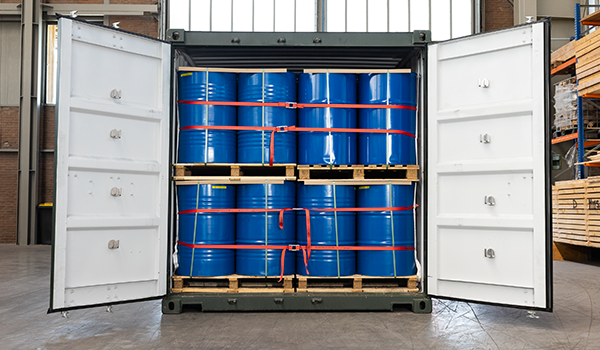
Focusing on transit packaging, this places greater emphasis on durability, traceability, and compatibility with automated handling where possible within handling cycles, and tested within real‑world logistics operations. From 1st January 2030, PPWR states that 40% of transport and sales packaging is reusable. This requirement applies to formats such as pallets, foldable plastic boxes, boxes, trays, plastic crates, intermediate bulk containers, pails, drums, and canisters, including pallet wrapping and straps.
Maximise Recyclability in Packaging
PPWR requires packaging to be designed for recyclability at scale where reuse might not be feasible, providing guidance to create sustainable packaging throughout the supply chain.
As it stands, guidance from 2030 will require all packaging within the EU market to meet a minimum recyclability threshold of 70%.
The European Union considers recyclability under PPWR to be assessed on the following criteria:
- Compatibility with existing sorting and recycling infrastructure
- Ability to recover secondary raw materials of sufficient quality
- Harmonised design‑for‑recycling criteria to be defined through delegated acts
Creating a practical approach for system‑wide recyclability.

Interpreting Packaging within a Full System
One of the most significant shifts under PPWR is its insistence on system‑level thinking. Packaging is no longer assessed in isolation, but as part of a wider operational and environmental ecosystem, covering:
- Product protection and distribution
- Handling, storage, and logistics
- Reuse loops and reverse logistics
- Sorting, recycling, and waste treatment infrastructure
The regulation explicitly covers the entire packaging lifecycle and aligns with the EU’s broader circular economy objectives

Reduce Over Packaging
The EU legislation wants to move away from design for convenience to design for efficiency and circularity. PPWR considers over packaging as a creation of packaging which exceeds what is required to protect the solution regarding weight and volume.
The legislation will set a limit to unnecessary packaging, where unnecessary layers, void space, or oversized formats can result in non‑compliant packaging being placed on the EU market.
This will reinforce that damage prevention through smart design is preferred over over‑packaging.
Reduce Single Use Plastics
Looking to remove use cases where plastic products are designed to be used once, or for a very short time, before being discarded. Within the PPWR regulation, all packaging is presumed to be a single‑use application unless it meets reuse requirements.
Where reuse or refill systems are viable, this will be encouraged. The legislation will aim to avoid material substitution that simply shifts environmental impacts. The EU is looking to create a focus on circular design, removing historical conveniences.
Inside PPWR: End of Line Transit Packaging
Explore more on Packaging and Packaging Waste Regulation (PPWR) find updates from Signode as the regulation evolves.
Read more